


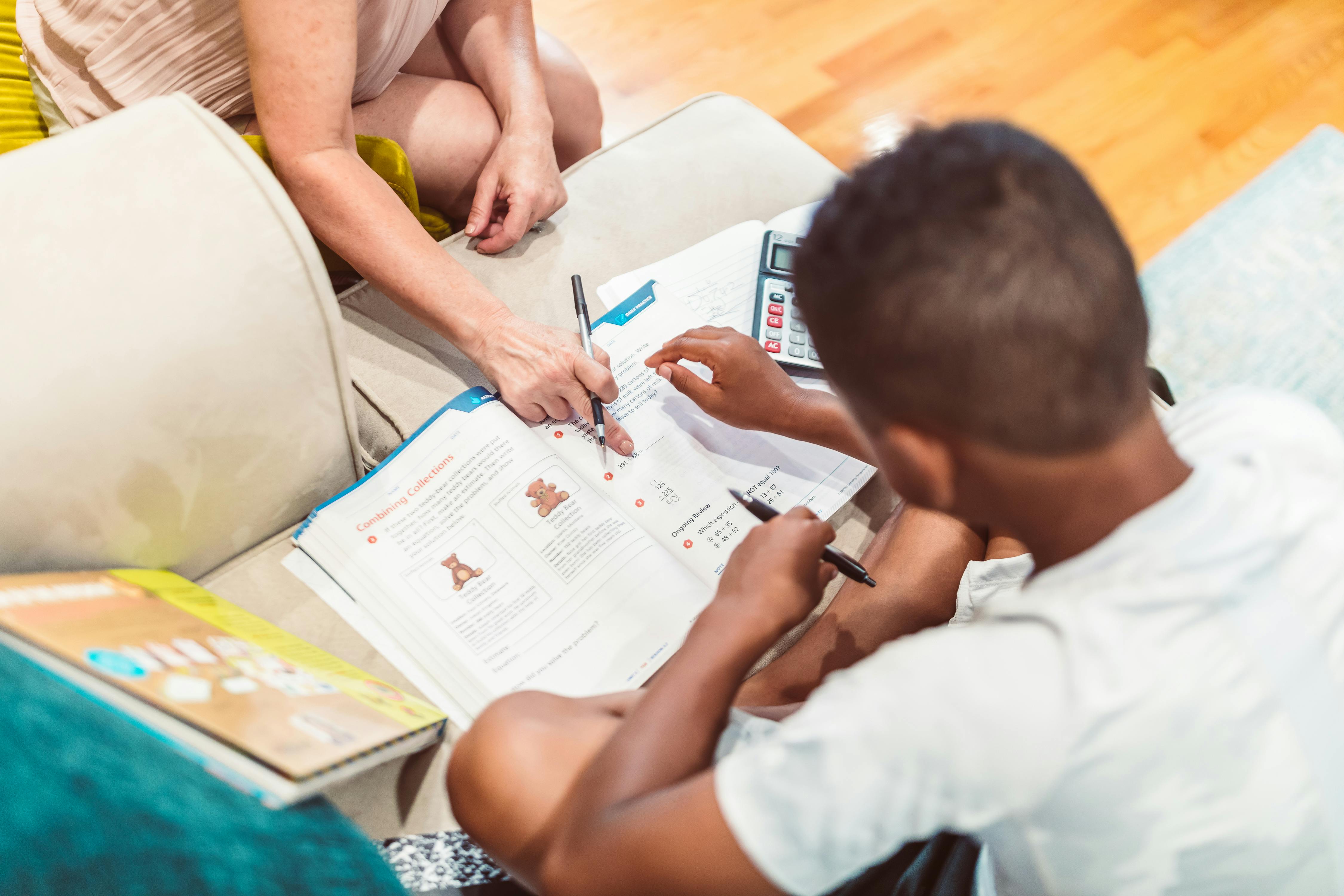

If math made you anxious at school, there's a reasonable chance you're passing that on — but not in the way most people assume. Research from the University of Chicago found that children of math-anxious parents learned significantly less math over the school year and became more math-anxious themselves, but only when those parents frequently helped with math homework.
Where math-anxious parents helped less often, there was no relationship at all. And the parents' actual math ability turned out not to matter. It was the anxiety that transmitted, not the lack of knowledge.
The study, published in Psychological Science by Erin Maloney, Sian Beilock, Susan Levine and colleagues, followed 438 first- and second-grade students and their primary caregivers across a school year. Children were assessed for math achievement and math anxiety at the start and the end; parents completed a questionnaire about their own anxiety around math and how often they helped with math homework.
The result was specific. Children of math-anxious parents learned less math and ended the year more anxious — conditional on frequent homework help. When help was infrequent, children's achievement and attitudes were unrelated to their parents' anxiety.
One detail makes the finding hard to explain away. The researchers also measured reading achievement as a control, and found it was not related to parents' math anxiety. Whatever is happening is specific to math rather than a general effect of anxious parenting.
Because the anxiety comes through in how the help is delivered rather than in what's said explicitly.
The researchers suggested two mechanisms: math-anxious parents may be less effective at explaining math concepts, and may respond poorly when a child makes a mistake or solves a problem in an unexpected way. Beilock put the everyday version plainly — a parent walking around saying they don't like math, or that it makes them nervous, is sending a message children pick up.
A child watching a parent tense up over a Grade 3 worksheet learns something about what math is. They learn it faster from the sighing and the impatience than from anything actually said about numbers.
No — and that's the wrong conclusion to draw from it.
The researchers were explicit that the answer isn't for anxious parents to withdraw. Their conclusion pointed toward interventions that both reduce parents' math anxiety and support their skills in helping with homework. A follow-up study using a math app with families found that improving parents' own attitudes toward math translated into higher achievement for their children.
The researchers' framing is worth quoting for its bluntness: you can't simply tell parents — especially anxious ones — to get involved. Preparation matters.
So the useful reading isn't "stop helping." It's "change what helping looks like."
Stop announcing it. The single easiest change. "I was never a math person" is meant as solidarity and lands as permission. If you say nothing else differently, say that less.
Let them lead. Ask how their teacher showed them rather than demonstrating your own method. This sidesteps the explaining problem entirely — you're not teaching, you're listening.
Watch your reaction to mistakes. This is where anxiety leaks most. A mistake is information about where the gap is, and the response that helps is "show me how you got there," not a visible flinch.
Be honest without being fatalistic. "I find this hard too, let's work it out" is fine. "I could never do this either" is not. The difference is whether difficulty is presented as a state or as an identity.
Handle the parts you're comfortable with. Reading, organization, checking work is done. Helping doesn't have to mean teaching the math.
Get someone else to do the math part. If every homework session ends with both of you tense, that's a reason to hand it over. Not because you're failing, but because the research suggests the anxious help is doing less good than it appears to.
Not sure whether it's your child's math or the atmosphere around it? A free assessment will show you which specific skills are missing, usually in about an hour. See how math tutoring works.
Separate from what parents transmit, some children develop real anxiety about math itself — freezing on tests, avoiding the subject, deciding early that they're bad at it.
The pattern to watch for is a child who can do the work at home and not under test conditions. That gap points at anxiety rather than at a knowledge gap, and it needs a different response: more practice under low-stakes timed conditions, not more content review.
Watch the language they use about themselves too. "I'm bad at math" is a belief that hardens with repetition, and it's worth challenging with specific counter-evidence — a topic they found hard last term and can now do — rather than with general reassurance.
If anxiety around school is significant or spreading beyond math, that's worth raising with your family doctor rather than treating as an academic problem.
The researchers acknowledged a genetic component is possible, but their findings point strongly at transmission through behaviour rather than biology. The effect appeared only when math-anxious parents helped frequently with homework, which is difficult to explain genetically. That's encouraging, because behaviour is something families can change.
According to this research, no — parents' math knowledge did not predict children's outcomes. What mattered was the parents' anxiety about math and how often they helped. A parent who finds math hard but stays calm about it is in a better position than a capable parent who finds it stressful.
That gap is a classic signature of math anxiety rather than a knowledge problem, and the fix is different. Practising under mild time pressure at home builds tolerance for test conditions in a way that more content review doesn't. Mention it to the teacher, since some accommodations for test anxiety are straightforward to arrange.
Concealment isn't really the goal, and children usually notice anyway. What matters is how you frame it. "This is hard and we'll work it out" teaches something different from "I could never do this," because the first presents difficulty as temporary and the second presents it as who you are. Modelling persistence through difficulty is more useful than pretending the difficulty isn't there.
The research discussed here found measurable effects in first and second grade, so earlier than most parents expect. That's an argument for paying attention to the emotional tone around math in the early years, not just the content. By the time a child announces they hate math, the attitude has usually been forming for a while.
Math anxiety passes from parent to child, but through frequent homework help rather than through genes — and your own math ability isn't the issue. The researchers' answer isn't to stop helping; it's to change how you help, and to get the anxiety out of the exchange.
If homework has become a tense hour for both of you, talk to us about taking that part off your plate — we'll find out what your child actually needs and match them with a certified teacher who can work on it calmly, in your home or online.
This article discusses research on math anxiety and academic achievement. It is general information, not psychological advice. If anxiety is significantly affecting your child beyond schoolwork, speak with your family doctor.

About the author
President of Tutorbright